Aveda Cares
アヴェダの社会環境への配慮

動物たちとアヴェダ

アヴェダは、創設以来動物実験を行っていません。 アヴェダの製品は、”人によりテスト”*1されます。

動物実験をしないブランドであるということは、自分たちの暮らす地球とそこに共存する生物を思いやるという、1978年の創設以来続くアヴェダの使命の重要な要素の一つです。

アヴェダは、美の世界のみならず、あらゆる世界においてリーダーシップと責任をもって環境保全の模範となる企業を目指します。動物や野生生物に配慮するというアヴェダの誓いは大きく広がっています。

2022年、アヴェダはクルエルティフリー製品の国際的基準であるクルエルティフリー・インターナショナル リーピングバニープログラムから認証を受けました。

動物実験に対するポリシー

アヴェダは、化粧品はクルエルティフリーであるべきだと考えています。そして、アヴェダがリーピングバニー認証を受けたことを誇りに思っています。リーピングバニープログラムは国際的なプログラムであり、法的要件を超える厳しいクルエルティフリー基準が設けられています。

すべてのアヴェダ製品は、クルエルティフリー製品の国際的基準であるクルエルティフリー・インターナショナル リーピングバニープログラムの下で認可されています。アヴェダは、固定締切日ポリシーを遵守し、アヴェダ製品が継続してリーピングバニー基準に準拠していることを確認するために、サプライヤーを積極的にモニタリングしています。アヴェダのサプライヤーモニタリングシステムも、独立機関の監査を受けています。

クルエルティフリー・インターナショナルとリーピングバニーについて詳しくは、www.crueltyfreeinternational.orgをご覧ください。

アヴェダが製品を通して成し遂げてきたこと

1989年、アヴェダは民間企業として初めて、地球と“そこに住むすべての生物”の保護を訴えるセリーズ原則に署名しました。

そして、2021年1月1日、ついにすべてのヘアケア、スタイリング、ボディケア、スキンケア、アロマ 、ヘアカラー製品がヴィーガン*2になりました 。

ミネソタ州ブレインにあるアヴェダの製造工場は、全米野生生物連盟(National Wildlife Federation、NWF)から野生生物の生息地域として認定されています。敷地内の野生生物保護のため、アヴェダはNWFと協力して“思いやり運転”の標識を作っています。

また、アヴェダはミネソタのオーデュボン協会とともに、ミネソタ州ブレインにある本社敷地内の鳥類繁殖地の保護も進めています。この協力事業では、エントツアマツバメやムラサキツバメのネストハウス、アメリカオシドリのネストボックス、ルリツグミのネストハウスの設置などを行っています。

2007年以降はアヴェダ アースデー月間プログラムを通してオーデュボン協会のミシシッピ川上流での活動も支援しています。この活動では、ミシシッピ川周辺の鳥類その他野生生物の棲息地を保護するため、水質改善事業に直接の資金援助をしています。

2010年以来、アヴェダ本社では社員から使用済み携帯電話を回収し、ミネソタ動物園の後援する熱帯雨林のためのリサイクルプロジェクトに寄付しています。この寄付金は現在、コンゴ共和国(西アフリカ)のグアルゴ三角地帯霊長類プロジェクトによる保全対策に使われています。

自然災害発生時の動物救援活動も支援しています。ハリケーン「カトリーナ」襲来の際にはアニマル ヒューメイン ソサイエティに寄付したほか、メキシコ湾原油流出事故のときには全米野生生物連盟(National Wildlife Federation、NWF)にも寄付をしました。

アヴェダでは、絶滅の危機に瀕する植物とその棲息地、そこに棲む動物たちを保護する草の根団体の支援も行っています。アヴェダのネットワークを介して過去10年集められたこのための募金は、800万ドル以上に上ります。

2006年には、絶滅危惧種保護法を支持するため、関係者やお客様から50万筆以上の署名を集めて国連およびホワイトハウスに届けました。

ミネソタ州ブレイン市の本部では、殺虫剤を使わない餌や水、シェルターを用意してミツバチの棲み処を作るなど、養蜂を実践しています。

ワイルドライフ フレンドリー エンタプライズ ネットワークのWildlife Friendly®認証を受けた、ネパールのロクタ樹皮から作られたこの手漉き紙(ロクタ紙)を購入することで、ハイイロオオカミやスノーレオパード、ヤクなど、21種類の絶滅危惧種を含む野生生物のため、42,000エーカーの森林を保護し、その生存の鍵となるコリドー(緑の回廊)を保全する手助けをしています。
乳がん研究支援サポート

アヴェダでは、毎年10月のエスティ ローダー グループのピンクリボン キャンペーン月間に、ハンド リリーフの限定版を発売し、1本の販売につき5ドルを乳がん研究基金(Breast Cancer Research Foundation®、BCRF)に寄付して動物実験を含まない乳がん研究をサポートしています。さらに日本で、200円*3(本体価格約5%)を米国乳がん研究基金(BCRF)やJBCRG(Japan Breast Cancer Research Group)等に寄付し、医療研究に役立てられます。

BCRFは、1992年にエブリン・H・ローダーによって設立された非営利団体で、全米各地の医療研究機関の乳がんに関する臨床・遺伝子研究に資金を提供している唯一の国立機関でもあります。BCRFについて更なる情報は、こちらをご参照ください。

動物実験を含まない研究の支援

アヴェダの寄付金は、有毒化学物質や汚染物質への暴露など、環境的要因と乳がんの関係性を探る研究のうち、動物実験を行わないものを対象としています。具体的には、乳がんにおける環境暴露や遺伝子の相互影響を探るニューヨーク市コロンビア大学の研究に長年、資金を提供しています。今後も同研究のほか、類似の研究を支援していきます。

自分たちにできる支援を

2001年以来、アヴェダのピンクリボン募金には630万ドル以上の寄付金が寄せられています。これには、企業としての寄付金だけでなく、毎年10月にアヴェダ ネットワークを介して行われる乳がん研究基金®向け募金活動で集まった社員やお客様からの寄付も含まれています。

乳がんに関してできること

自分自身、そして周りの大切な人たちのために、セルフチェックと定期的な健診をしましょう。ちょっとした生活スタイルの変化や定期的な検診によって、すべてが変わってきます。早期発見が命を救う鍵です。実際、初期の局所的な乳がんであれば治癒率は98%にも上ります*4

自分の身体を知りましょう

定期的に自分で乳房をチェックし、何か変化に気づいたらお医者さんに相談しましょう。

乳がん検査を受けましょう

20代や30代のうちから定期的に乳がん検査を受けましょう。40歳を過ぎたら、あるいは40歳未満でもリスクが高いと感じれば、マンモグラフィー検診を毎年受けましょう。

体調を整えましょう

繊維や栄養素を含む野菜や果物を多く取る習慣をつけましょう。

適切な体重を維持しましょう。体重が増えすぎるとリスクも高まります。

アルコールの摂取量を制限し、より健康な生活を送りましょう。

たばこを吸うのは止めましょう。現在喫煙している場合はすぐに禁煙しましょう。

たくさん運動しましょう。アメリカがん学会(American Cancer Society、ACS)によれば、乳がんのリスクを抑えるには、週に5日以上45~60分の運動を意識的に行うと良いと言われています。

Aveda and the Yawanawa tribe

The Yawanawa people, who cultivate the beautiful vermilion Uruk seeds of Brazil, are working together as a community for growth and regeneration with the support of Aveda.

The homeland of the Yawanawa indigenous people lies along a tributary of the Rio Gregorio River in the depths of the Brazilian Amazon. Their homeland spans a vast 92,859 hectares, encompassing ancestral rainforests, riverside plains with villages, and scattered hunting grounds.

Aveda's unique story behind sourcing Uruk, commonly known as annatto, is also a story of the regeneration of Brazil's indigenous people. When Aveda's founder first met the Yawanawa people more than 20 years ago, he was inspired by their traditional use of Uruk, a vibrant vermilion dye, for face and body paint designs. Since then, Aveda has incorporated this raw material into various products and packaging at different times. And through their growing relationship with the Yawanawa people, they have achieved many successes together and brought about significant change.

History of the Yawanawa people

The Yawanawa community suffered for many years, starting in the late 19th century. Rubber growers seized the land inherited by the Yawanawa from their ancestors, clearing the rainforest to create large rubber plantations and forcing the Yawanawa people to work. At the same time, missionaries attempted to convert the Yawanawa to Christianity, suppressing their traditional culture and rituals. For generations, the Yawanawa desperately resisted, trying to protect their identity and preserve their centuries-old traditions. In the mid-20th century, as the natural rubber market declined, many Yawanawa, relying on stable cash incomes rather than traditional hunting and farming, left their villages and headed to Brazilian cities in search of work. This made it even more difficult to maintain their traditional culture.

The first signs of improvement appeared in 1984, when missionaries selected a young man named Biraki Brazil to join their missionary group. Biraki, who was of Yawanawa descent, was sent to the nearby city of Rio Branco for further education. There, he learned that there were laws guaranteeing the rights of indigenous peoples and government agencies created to handle matters concerning indigenous peoples. Biraki gathered evidence of the Yawanawa people's legitimate ownership of their land and returned home, leading the Yawanawa people in a fight to have their land returned. In 1987, Biraki was elected chief of the Yawanawa people and subsequently liberated the community from the declining rubber industry and the missionaries.

For the Yawanawa people, devising ways to become economically self-sufficient was a crucial challenge in order for their community members to return to their homeland and rebuild their tribal traditions and culture, as they had become increasingly dependent on cash income for nearly 100 years.

The Yawanawa tribe and Aveda establish a cooperative relationship.

Aveda and the Yawanawa people first connected amidst these emerging needs. In 1992, at the first United Nations Conference on Environment and Development (Earth Summit) held in Rio de Janeiro, Brazil, Mr. Biraki and Aveda's founder, Horst Reckerbacher, met.

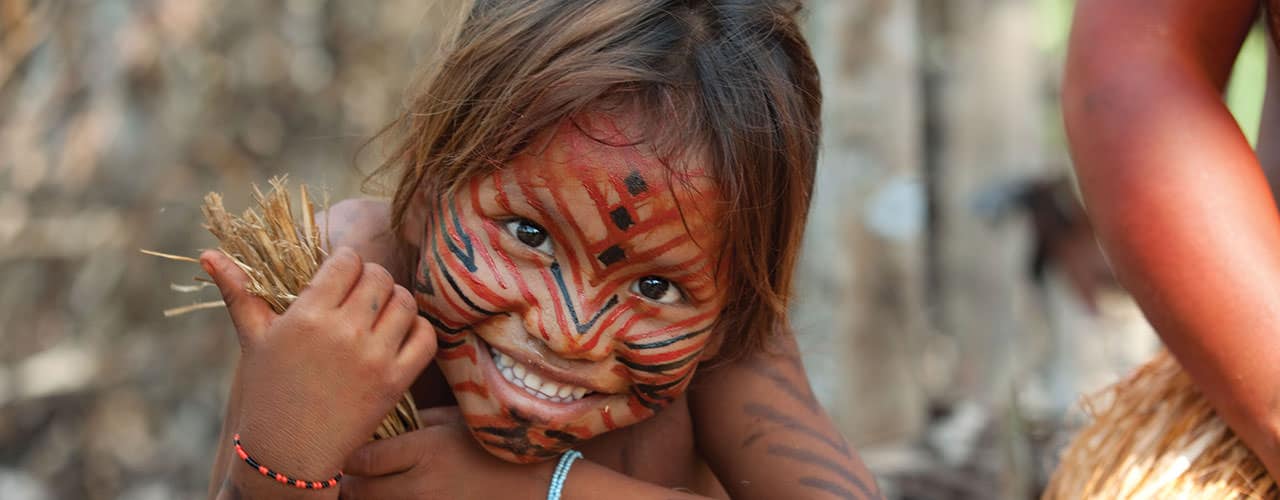
Uruk dye, extracted from the spiky seeds of the fruit, is an essential ingredient in the spiritual and cultural life of the Yawanawa people. Besides being used for individual expression, it's also used in special ceremonies to create intricate geometric body paintings—important tribal symbols—or to be applied evenly across the body. Each design is unique, making each person an artist. Discovering this creative and beautiful use of a widely used ingredient, Aveda was drawn to the Yawanawa as a special source for its annatto supply.

Annatto dye is an inexpensive food coloring, and there are other companies that commercially produce annatto in tropical regions, but Aveda has deliberately chosen to partner with this community. This is because Aveda is committed to supporting traditional farming methods and helping to preserve the deep wisdom and culture of indigenous peoples, including their knowledge of plants.

The journey from harvesting wild crops for traditional tribal uses to producing raw materials was not easy. For the first ten years, only a small amount of uruk was actually produced, but during that time, processing techniques were developed and improved, and third-party processing companies were identified. Also during this time, there was a change of leadership in the community. Tashka Yawanawa, a young member of the tribe who had been studying business in a nearby city, was chosen by the elders to succeed Biraki.

In the 2000s, under Tashka's leadership, remarkable progress was made. This included further reconstruction of traditional culture, the introduction of modern medicine, improved food security, and, most importantly for the tribe, formal guarantees of ancestral land rights. During this time, the Yawanawa were able to secure a stable supply of Uruk for Aveda, which was able to use it in various cosmetics and packaging. However, a split in leadership occurred in 2008. While the Yawanawa remain united and unwavering in their commitment to land preservation, they are now divided into those who follow Biraki and those who follow Tashka.

Benefits and challenges of collaborative relationships

The Yawanawa tribe has stated that since establishing a cooperative relationship with Aveda, they have been able to achieve many results with Aveda's support.

  • The reconstruction and strengthening of the Yawanawa people's traditional culture. The first book written in the Yawanawa people's native language has been published, and a video titled "Yawa" has been produced to introduce their culture to the world.
  • Various developments in the community: the establishment of a new Uruk farm in the new community "Nova Esperanza," the introduction of equipment for processing Uruk, the construction of a school, educational support to enable students to attend university, the opening of a clinic to enable malaria treatment, the installation of drinking water wells funded from funds raised during Earth Day month, improved food security through new farming methods, and, most recently, funding for a program to transition to biodiesel engines for river transport.


This collaboration brought many benefits to Aveda as well. For example,

  • I learned how to engage with traditional communities. Now, it has become an important element in building relationships across Aveda's broader supply chain.
  • Through our connection with the United Nations, we were able to gain more knowledge about indigenous cultures around the world and deepen our relationships with them.
  • We were able to witness the development of the Yawanawa people and share that experience with our customers.
  • We were able to incorporate the traditional materials and artistic designs of the Yawanawa people into our products and packaging.


There have been several challenges in our long-standing collaborative relationship:

  • The journey from harvesting wild crops for traditional tribal uses to producing them as raw materials was not easy. For the first decade, only small amounts of uruk were actually produced, but during that time, processing techniques were developed and improved, and third-party processors were identified.
  • The support we originally envisioned for the Yawanawa people to build sustainable businesses has not yet materialized. This is mainly because the area where they live is remote and they have difficulty accessing markets where they could potentially thrive.
  • Uruk production was temporarily suspended in 2008 when a leadership split occurred. The villages that decided to follow Tashka established a new cooperative called Associação Sóciocultural Yawanawa (ASY). Here, a new method of sourcing uruk for Aveda was established. Until then, Aveda had been unable to source uruk cultivated by the Yawanawa people and had to rely on other suppliers to obtain uruk for use in its products.


Throughout the years of interaction, there have been challenges, but the relationship with the Yawanawa people has continued to evolve. This relationship is also a moving story of one company and one indigenous community working together to preserve the ancestral Amazon rainforest, which is home to a diverse array of life.

Looking towards the future

Aveda continues to support the development of new Uruk sourcing methods from communities belonging to Associação Sóciocultural Yawanawa (ASY) to compensate for the portrait rights of community images used in brand communications and to support various community projects. At the same time, Aveda is working with the Yawanawa people as a whole, exploring various possibilities for the future to achieve true sustainability and economic self-sufficiency. Although still in the early stages of this process, they are working together to explore opportunities to earn revenue from "ecosystem services" such as watershed protection, and biodiversity conservation in order to protect their pristine forests. Aveda will continue to support and collaborate with the Yawanawa people as a whole to ensure that this truly wonderful 28-year relationship leads to long-term success.


*1 アヴェダはクルエルティフリーブランドとして、ボランティアに同意された方々、またイン・ビトロ分析を通して製品の完成品をテストすることによって、製品の安全性と有効性を保証しています。

*2 アヴェダは動物由来成分を配合せず、動物実験も行わない主義です。

*3 10月の1ヶ月間で販売する本数対象

*4 限局期の乳がん(リンパ節や胸部以外に転移していない乳がん)と診断された女性の5年生存率は98%ですが、リンパ節近くまで侵襲している場合(局所期)は84%、リンパ節や他の臓器に転移している場合(遠隔期)は24%まで生存率が低下します。
参照:Breast Cancer Research Foundation (外部サイトへ移動します)